What changed for the Daybreak HOA in 2026? Utah's SB 122, in effect since May 6, 2026, made some HOA restrictions unenforceable even when they're written into the CC&Rs. Separately, Daybreak homeowners have until November 16, 2026 to elect the one board seat residents vote on.
Most HOA news is a reminder about fireworks or leashes but Daybreak has other news.
If you've ever gotten a courtesy letter about your basketball hoop, your doorbell camera or the brown spot in your park strip and wondered whether the HOA is even allowed to say that, here's the useful answer.
Who actually runs the Daybreak HOA
The Daybreak Community Association board has six seats. Here's how the association's board page lists them this month (Daybreak Community Association):
President (currently TBD)
Treasurer
One Resident Voting Board Member, elected by homeowners
One Founder-appointed member
Two Founder-appointed resident members (one seat currently TBD)
According to Daybreak's own website, the board is made up of both the developer, Larry H. Miller Real Estate, and resident members, and it will shift to all residents "over time, as the community grows" (Daybreak Utah).
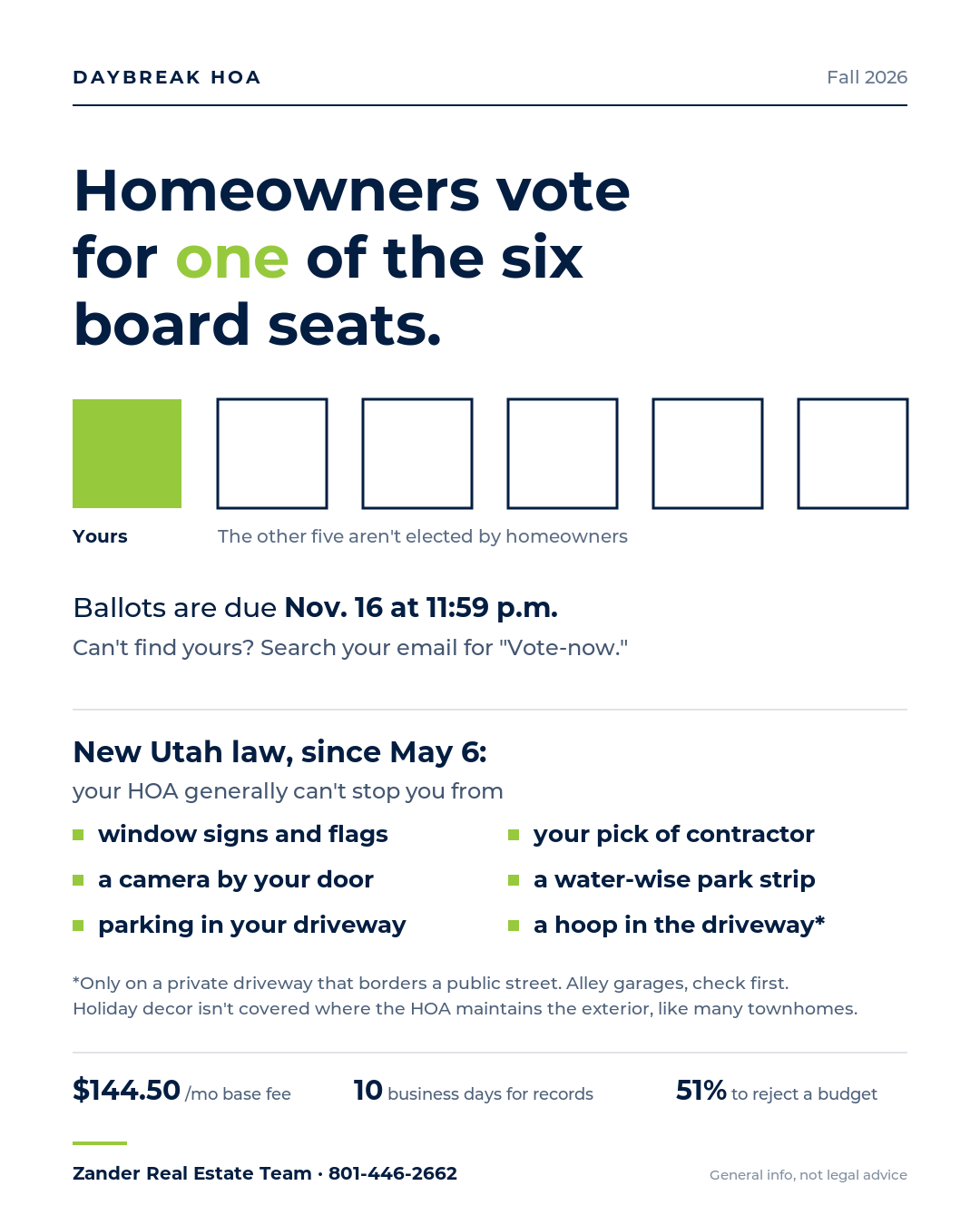
In plain terms, the election fills one of six seats. Some of the other seats are held by residents too, but they're appointed, not voted in.
That's normal for a master-planned community that's still being built, and Daybreak is still being built. But many owners assume the board is a group of neighbors they elected, and mostly it isn't. That's why the one seat you do pick deserves some consideration.
The election: what to know before Nov. 16
Three homeowners are running for the Resident Voting Board Member seat, which is a two-year term: Dean Anderson, Cindy Costa and Bruce Parker. Their bios are on the election page.
How to vote: Each household received one electronic ballot by email through Vote-now. Owners without an email on file were mailed paper ballots the week of October 5.
Deadline: Electronic ballots are due by 11:59 p.m. on November 16, 2026. Paper ballots must be received by noon that day, so don't mail yours on the 15th.
One vote per household, not one per owner.
Results: The winner will be announced at the Annual Meeting on Wednesday, November 18, at the Daybreak Community Center.
Can't find your ballot? Search your inbox and spam folder for "Vote-now" before you call the office.
Five questions you could ask
Would you support reviewing our rules and design guidelines for anything SB 122 made unenforceable?
How should the park strip approval process work now that state law limits restrictions on water-wise strips?
Owners can now formally reject a budget. How will you make the budget easy for owners to understand before it's adopted?
How will you keep owners informed between quarterly meetings?
What's your view on the sub-associations, where the biggest fee surprises tend to happen?
That last one isn't hypothetical. In late 2024, the nearly 400 units in the Daybreak Townhomes 1 association learned they'd pay $240 more a month for 20 years starting in January 2025, or a lump sum of about $31,000, to fix leaky windows and roofs after the association's lawsuit against the builders failed (KSL). One owner told KSL his total HOA bill would go to nearly $700 a month. The master board doesn't run the sub-associations, but a resident board member who watches them closely is worth having.
Can you add a basketball hoop in Daybreak?
SB 122: "Can my HOA still Make me...?"
Governor Cox signed SB 122 on March 17, 2026, and it took effect May 6 (Governor's Office). The big change: limits that used to apply only to rules the board adopts now apply to the CC&Rs too. According to Utah HOA attorney Curtis Kimble's summary, a CC&R provision that conflicts with the law is now unenforceable even if it has been in the documents for years (Utah HOA Law Blog).
Here are the questions Daybreak owners actually ask, with the catches nobody mentions.
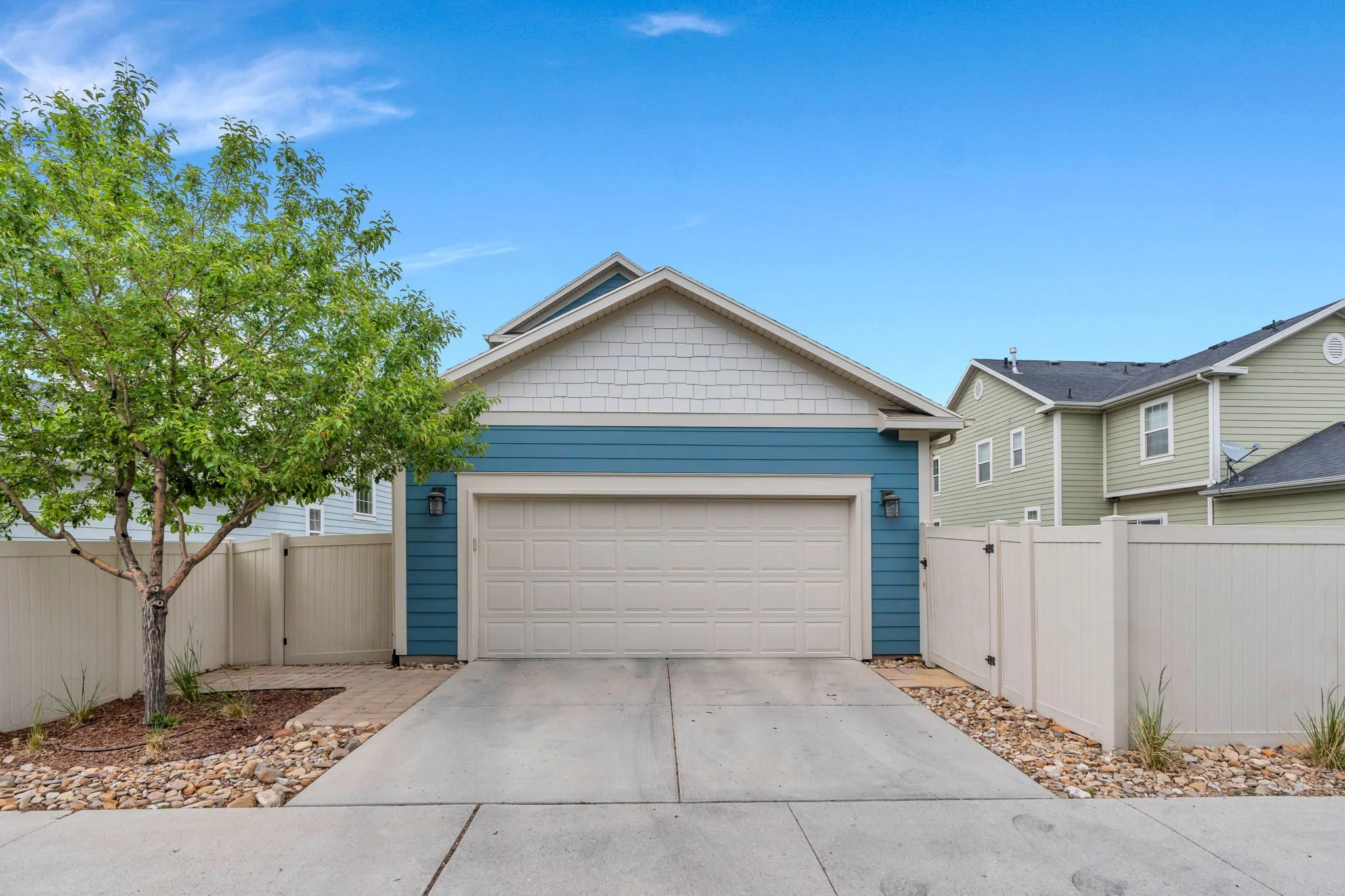
...take down my basketball hoop? Not if the driveway is privately owned, privately maintained and borders a public street. The Daybreak catch: many Daybreak homes have garages off a rear alley. If your driveway comes off an alley, whether this protection applies may depend on whether that alley is a public street. Check with South Jordan City or the association before you count on it.
...only hire contractors from an approved list? No. An HOA can't stop you from hiring someone just because they're not on a preferred vendor list. You'll still need Design Review approval for exterior changes.
...take down my doorbell or security camera? No, as long as it's mounted right next to a door, window or other entry point.
...remove my holiday decorations? Usually not, but the HOA can still regulate reasonable time, place and manner. The Daybreak catch: this protection doesn't apply if the association owns or maintains the exterior. That covers many Daybreak townhomes and condos, where the sub-association handles the outside of the building.
...ban political signs? Not in your window. With Election Day on November 3, that's the timely one. The law protects window displays of political signs, for-sale signs and flags. The HOA can still reasonably regulate size and placement, and the protection doesn't specifically cover yard signs.
...stop me from parking in my own driveway? Not for an operable car you have a legal right to park there. The HOA can still require you to use your garage first, and it can still restrict RVs, trailers, boats, off-highway vehicles and work vehicles.
...block a water-wise park strip? Not for a grass park strip narrower than eight feet, except where it's reasonably needed for erosion control. More on this one below, because Daybreak's rules make it interesting.
...say no to radon mitigation? No, as long as the work meets industry standards.
The park strip question
Daybreak already encourages water-wise strips through its Flip the Strip program. But the program comes with a lot of conditions: Design Review Committee approval, drip irrigation, steel edging, neutral rock mulch 1 to 2 inches in size (no black, red or white rock), and 80 to 100 percent plant coverage at maturity.
The new law says a declaration may not "prohibit or restrict" converting a park strip under eight feet to water-efficient landscaping. How that fits with Daybreak's approval process and design standards is a fair question, and we haven't seen it tested. We're not lawyers, so we won't tell you where the line is.
Here's the practical path: apply through Design Review, use the association's pre-approved templates, and keep your approval in writing. If you hit a wall, the state's HOA Ombudsman (below) exists for this kind of question. And fall is a good time to plant. Even the association says so.
Three quieter changes that give owners more leverage
You can reject a budget. Under current Utah law, owners can disapprove the association's budget if at least 51% of all allocated voting interests vote no at a special meeting that owners call within 45 days after the board presents the budget (Utah Code 57-8a-215). SB 122 removed the old rule that blocked this while a developer controls the board. It's a high bar, since 51% means all voting interests, not just the people who show up. But the right now exists, and that alone changes the conversation.
Records requests have a clock. Associations now have 10 business days to respond to a records request. If you want financials, minutes or reserve information, put the request in writing and note the date.
There's a referee. Utah's HOA Ombudsman will issue an advisory opinion for a $150 nonrefundable fee. As of this year, an association can't make you go through binding arbitration before you ask for one, although you do need to go through the HOA's own dispute process first (Utah HOA Law Blog).
If you're buying in Daybreak
Some of what you've heard may no longer be true. "The HOA won't let you put up a hoop" was a common thing to hear. Ask for the current rules, not the neighborhood folklore.
SB 122 doesn't touch fees. Dues, special assessments and reserves work the same as before. For a townhome or condo, the sub-association's budget and reserve study still tell you the most about what you'll actually pay.
FAQ
When is the 2026 Daybreak HOA election? Electronic ballots are due by 11:59 p.m. on November 16, 2026, and paper ballots must be received by noon that day. The winner is announced at the Annual Meeting on November 18, 2026, at the Daybreak Community Center.
How many Daybreak HOA board seats do homeowners elect? One. The board has six seats, and homeowners elect one Resident Voting Board Member to a two-year term. The other seats are held by the developer side or appointed, including two appointed resident seats.
Can a Utah HOA stop me from putting a basketball hoop in my driveway? Not if your driveway is privately owned, privately maintained and borders a public street. Since May 6, 2026, Utah's SB 122 makes CC&R provisions restricting properly maintained basketball standards in that situation unenforceable. Driveways off private alleys may not qualify.
Does SB 122 lower Daybreak HOA fees? No. SB 122 limits what associations can restrict and adds owner rights around budgets and records. It doesn't change dues, special assessments or reserve requirements.
This post is general information, not legal advice. For questions about your specific property, check your association's current governing documents or talk to a Utah HOA attorney.
If you're weighing a Daybreak home and want to know what you'd actually pay and which rules really apply to that address, we go through it with every buyer, sub-association and all. And if you just want to talk through what's changing in your neighborhood, the Zander Real Estate Team is always happy to help: 801-446-2662.