Does the FrontRunner 2X expansion affect Daybreak home values? Not directly. FrontRunner 2X double-tracks the Ogden to Provo commuter corridor, not Daybreak's TRAX Red Line. The nearest gain for Daybreak (South Jordan, Utah 84009) is the South Jordan FrontRunner station, a short drive east.
On August 7, 2026, the Federal Transit Administration moved FrontRunner 2X into the Engineering phase of its Capital Investment Grants program. That is the last procedural gate before a Full Funding Grant Agreement, and it puts an anticipated $1.28 billion federal commitment within reach (UDOT).
Since then, about every real estate agent in Utah has posted some version of the same take: big transit investment, property values up, buy now. We want to give you the less convenient version, because the reality is more interesting and complex.
What FrontRunner 2X Actually Is
FrontRunner 2X is a joint UDOT and UTA program to add 26.1 miles of double track across 11 locations on the existing 82-mile FrontRunner line, the commuter rail that runs Ogden to Provo through 16 stations.
Right now much of that line is single-tracked, which means trains have to wait for each other. Double-tracking removes that constraint. UTA's stated goal is to increase availability, frequency, and capacity by at least 60%. Today FrontRunner runs roughly every 30 minutes at peak and every 60 minutes off-peak (UTA).
Two things we want to point out:
The full program is roughly $3.2 billion, with about $850 million committed by the state and the federal share still subject to annual appropriation by Congress.
Construction is anticipated from 2027 through 2030. Not 2026 or next spring.
The Part that impacts daybreak
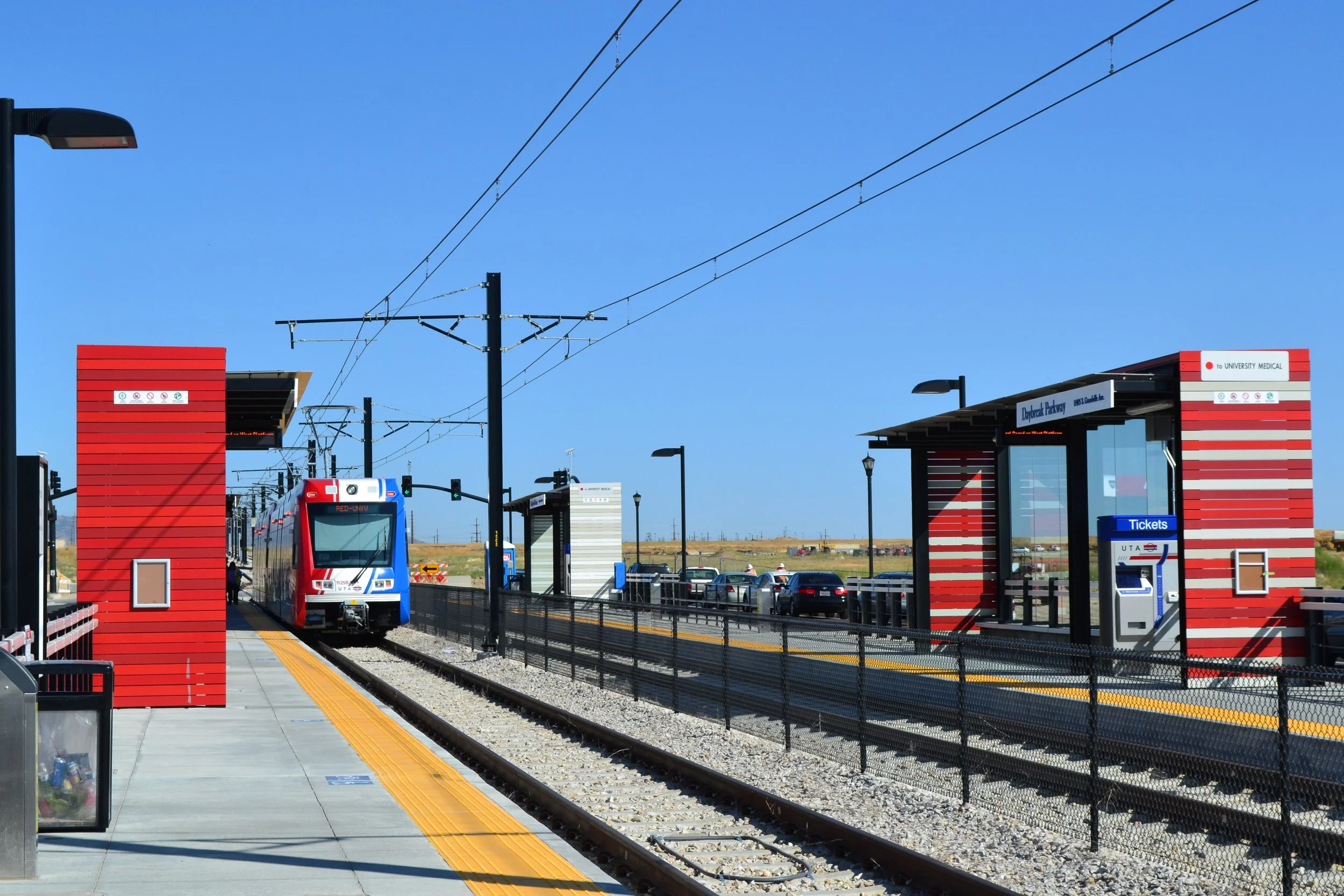
Daybreak is not on the FrontRunner corridor. Our rail is the TRAX Red Line, which terminates at Daybreak Parkway station, and the end-to-end ride into downtown Salt Lake City runs about 62 minutes (UTA Red Line).
FrontRunner 2X does not change that. The Red Line is a separate system with a separate set of problems, and no part of this $3.2 billion is pointed at it.
So the direct benefit to a Daybreak homeowner is narrow: if you already drive to the South Jordan FrontRunner station at 10351 S Jordan Gateway and ride north, your train comes more often starting around 2030.
Now let’s talk about what this means on a deeper level.
A better commute for Ogden also means more competition for buyers
Buyers who tour homes are usually weighing it against something. Those interested in the Daybreak area are often comparing against a larger house for less money somewhere further out. The further-out option costs less but instead costs them time in the car.
Improve commuter rail frequency by 60% along the Wasatch Front, and you have improved the case for the alternative house in Layton, Clearfield, or Orem. That effect is small, is years out, and is hard to predict the impact.
We are not saying this hurts Daybreak. We are saying the "transit investment equals your home value goes up" that you may be hearing isn’t as simple as people may think.
What This Should Change About Your Plans in 2026
Honestly, very little.
If you are selling in the next 12 to 24 months: do not price in a 2030 benefit. Buyers do not pay today for frequency improvements that arrive after a federal funding agreement that has not been signed yet, on a line that does not serve this community. Your Daybreak pricing conversation still comes down to your village, your finishes, your lot, and your comps within a half mile.
If you are buying in Daybreak: the transit asset you are actually purchasing is the Red Line, and it exists now. It is already built, already running, and already factored into what you pay.
If you are weighing Daybreak against a home further north or south: this is the one case where FrontRunner 2X should enter your math, and it should enter it with a 2030 date attached. Run the commute you will have for the next four years, not the one you might have in year five.
The Bigger Frame
Utah is spending real money to absorb growth it already has. UDOT is running 176 projects worth $2.8 billion in 2026 alone (KSL). That backdrop is good for Salt Lake County housing broadly, including here in 84009.
But "good for the region over a decade" and "changes what your house is worth this fall" are two different claims, and we want you to have all the information to make informed decisions. The decision that holds up is the one made on what is actually built, not what is announced.
FAQ
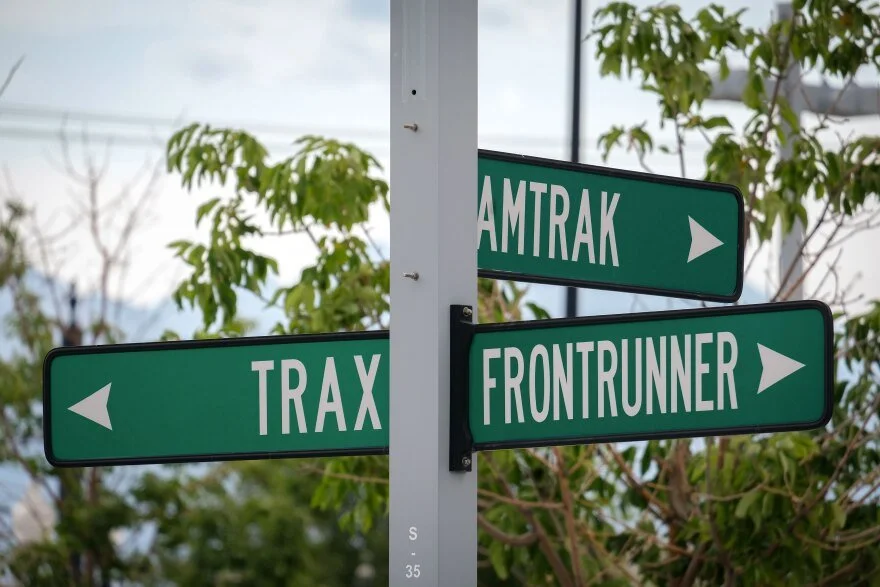
Does Daybreak have FrontRunner access? Not within the community. Daybreak is served by the TRAX Red Line at Daybreak Parkway station. The nearest FrontRunner stop is the South Jordan station at 10351 S Jordan Gateway, a short drive east of Daybreak.
Will FrontRunner 2X increase home values in South Jordan, Utah? Any effect is likely modest and years away. The project is scheduled to be built between 2027 and 2030, serves a corridor Daybreak is not on, and still requires a Full Funding Grant Agreement plus annual congressional appropriations. Homes closest to existing FrontRunner stations are the most plausible beneficiaries.
When will FrontRunner run more often? UTA and UDOT anticipate construction from 2027 through 2030, with the goal of improving frequency and capacity by at least 60% once complete. Current service runs roughly every 30 minutes at peak and every 60 minutes off-peak.
Is now a good time to buy in Daybreak? That depends on your timeline and your financing, not on a transit announcement.
If you want to know what your home in Daybreak is worth right now, based on comps from your village rather than a press release, we will put that together for you.
Ready to make your move in Daybreak? Call the Zander Real Estate Team at 801-446-2662.