the Salt Lake Valley housing market in June 2026
The Salt Lake Valley housing market in June 2026 is stabilizing after years of rapid appreciation. Salt Lake County's median sold price is approximately $561,000, with active listings at 4,719 (up over 4% year over year) and homes averaging 43 days on market. Single-family inventory remains tighter than the attached home segment, where townhomes and condos have continued to shift toward buyer's market conditions. Buyers have more negotiating room than in recent years, with roughly 58% of homes closing below list price. Sellers who price accurately are still closing.
If you've been watching the Salt Lake Valley real estate market and trying to figure out what it means for your next move, June 2026 is an interesting moment to take stock.
The "chaos market" of 2021 and 2022 is clearly over. The "crash" that some predicted never materialized either. What we're left with is a market that's genuinely recalibrating and whether that's good news or complicated news depends on which side of the transaction you're on.
Here's a clear-eyed read of where things actually stand in South Jordan, Daybreak, and across the Salt Lake Valley.
The Numbers: What the Data Shows
Salt Lake County (June 2026 data):
Median sold price for all property types: approximately $561,000, up 6.9% year over year
Median listing price: $555,000, down 1.8% year over year — a small but meaningful gap favoring buyers
Active listings: 4,719, up 4.2% year over year
Average days on market: 43 days (up from roughly 41 days last year)
Price per square foot: $270, down 2.2% year over year
Sale-to-list ratio: approximately 99.2%
58% of homes are closing below original list price
South Jordan specifically:
Median sale price: approximately $615,000, up about 0.9% over the past year
Active listings: approximately 332 properties
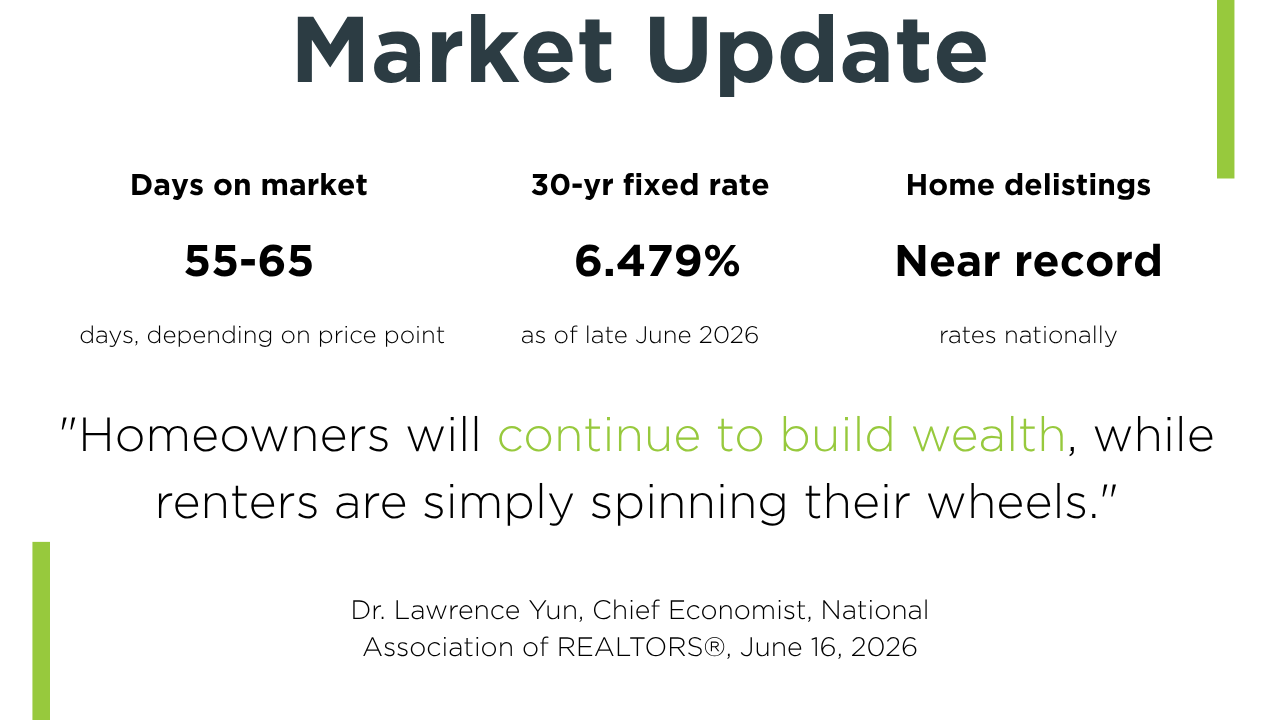
Average days on market: 55 to 65 days depending on price point
Daybreak:
Median listing price: approximately $567,000 as of June 2026
Days on market: approximately 59 days
Sale-to-list ratio: approximately 99.1%
The split between single-family and attached product remains significant. Townhomes and condos statewide continue to trend toward buyer's market conditions, while single-family inventory (though growing) remains undersupplied relative to demand.
What Buyers Are Experiencing Right Now
If you're buying in the Salt Lake Valley in summer 2026, you're in a position that would have been unrecognizable two years ago.
You can negotiate. In many cases, you can ask for closing cost credits, inspection repairs, or a seller-paid rate buydown and actually get it. Roughly 58% of Utah homes sold below their original list price in recent months, which means sellers are meeting buyers partway far more often than they were in 2022.
Buyers are also seeing more time to make decisions. The frenzy-of-the-moment offers and waived inspections are gone. You can do your due diligence, run your numbers, and make a thoughtful offer without feeling like you'll lose the home overnight. For a full breakdown of what the due diligence process looks like in Utah, see our post on Utah's due diligence period explained.
Current mortgage rates are sitting at 6.479% for a 30-year fixed as of late June 2026. That's not the 3% era, but it's not 7.5% either. Most forecasters now expect rates to end 2026 in the 5.7%-6.3% range, though the Fed has signaled a potential rate hike later this year, so the path down is less certain than it seemed a few months ago.
One dynamic worth watching: new construction townhomes in Downtown Daybreak are coming online this summer and fall, with builders offering rate buydown incentives. If you're weighing new construction against resale, understanding how those incentives stack up against negotiating on a resale is worth the conversation.
What Sellers Are Experiencing Right Now
For sellers, the message is more nuanced than "it's harder to sell." It's more accurate to say: the margin for error is smaller.
The sellers who are struggling in this market are the ones who priced for 2022 and hoped the market would catch up. It hasn't. Homes that start high and reduce are sitting longer, accumulating days-on-market stigma, and often closing lower than if they'd priced accurately from the beginning.
The sellers who are doing well priced for where the market actually is in 2026. They're not giving their homes away. They're being realistic, and the data shows it's working. The Daybreak sale-to-list ratio of 99.1% is a real signal: well-priced inventory in this community is still moving, even as days on market have stretched and buyers have gained more leverage elsewhere.
One trend that's gotten attention locally: more sellers are pulling their homes off the market rather than reducing. KSL reported recently that home delistings are at near-record rates nationally, and Utah is following the pattern. Some of this reflects sellers who listed aspirationally, didn't get the activity they expected, and chose to wait rather than adjust. That's a legitimate strategy in some cases, but it's worth understanding the tradeoffs before going that route.
If you're preparing to list, the two decisions that matter most are price and presentation. For a deep dive into pricing strategy, our post on how to price your home correctly in Utah's 2026 market walks through the full process.
The Daybreak Angle
Daybreak is worth calling out separately because the dynamics there are different from the broader South Jordan or Salt Lake County market.
The community's sale-to-list ratio of 99.1%, in a market where 58% of Utah homes are selling below list, tells you something important: Daybreak buyers are still paying close to asking price when the home is priced right. Days on market have stretched to around 59 days — longer than earlier this year — but that reflects the broader market slowdown, not a loss of confidence in the community. The built-in demand from Daybreak shufflers (residents moving within the community), TRAX access, and the ongoing Downtown Daybreak buildout are still supporting values in a way that many other submarkets aren't experiencing.
The new construction arriving in Downtown Daybreak this summer adds an interesting dynamic. Buyers now have more choices within the community, including new product with builder incentives. Resale sellers need to factor that competition into their positioning. For a full look at how Downtown Daybreak is affecting values, see our earlier analysis on Downtown Daybreak and home values in South Jordan.
What's Driving Market Uncertainty
A few things are creating a cautious tone in the market right now, even as the underlying fundamentals remain solid.
Economic uncertainty: The Salt Lake Board of Realtors' 2026 Housing Forecast points to a slowing Utah economy and broader economic uncertainty as a headwind. Utah is still adding jobs (roughly 16,900 new positions over the past 12 months at a 1.0% growth rate) but that's a notable deceleration from prior years, and net migration into Utah is slowing as housing costs have risen relative to other markets.
The lock-in effect: More than 60% of Utah mortgage holders have rates below 4%. That's keeping potential sellers on the sidelines even when their life situation might otherwise call for a move. This supply restraint is a big reason single-family inventory hasn't ballooned despite softer demand.
Rate sensitivity: Both buyers and sellers are watching mortgage rates closely. At roughly 6.47%, rates remain workable — but the Federal Reserve has signaled a potential rate hike later this year, meaning a move back toward 7% is a real possibility, not just a hypothetical. How rates move through the back half of 2026 will be one of the most important factors in how the market closes the year.
The Bottom Line for South Jordan Buyers and Sellers
This market rewards informed decisions over emotional ones, on both sides.
If you're buying: you have more leverage than you've had in years, and summer is active. Rates are in the mid-to-upper 6% range, and with the Fed signaling a potential hike later this year, waiting for a dramatic drop may not be the right strategy. What matters is buying the right home at a price that makes sense for current conditions- equity builds from day one regardless of where rates go.
If you're selling: the window is open, but it's narrower than it was. Price accurately, present your home well, and treat buyer concession requests as part of the conversation rather than an offense. The sellers closing clean deals right now are the ones who came in with realistic expectations.
Your specific situation like what your home will fetch, how long it will take, what you should offer or accept is a numbers conversation, not a headlines conversation. Headlines give you context, but a market analysis gives you a plan.
Frequently Asked Questions
Is it a buyer's market or seller's market in Salt Lake County in 2026?
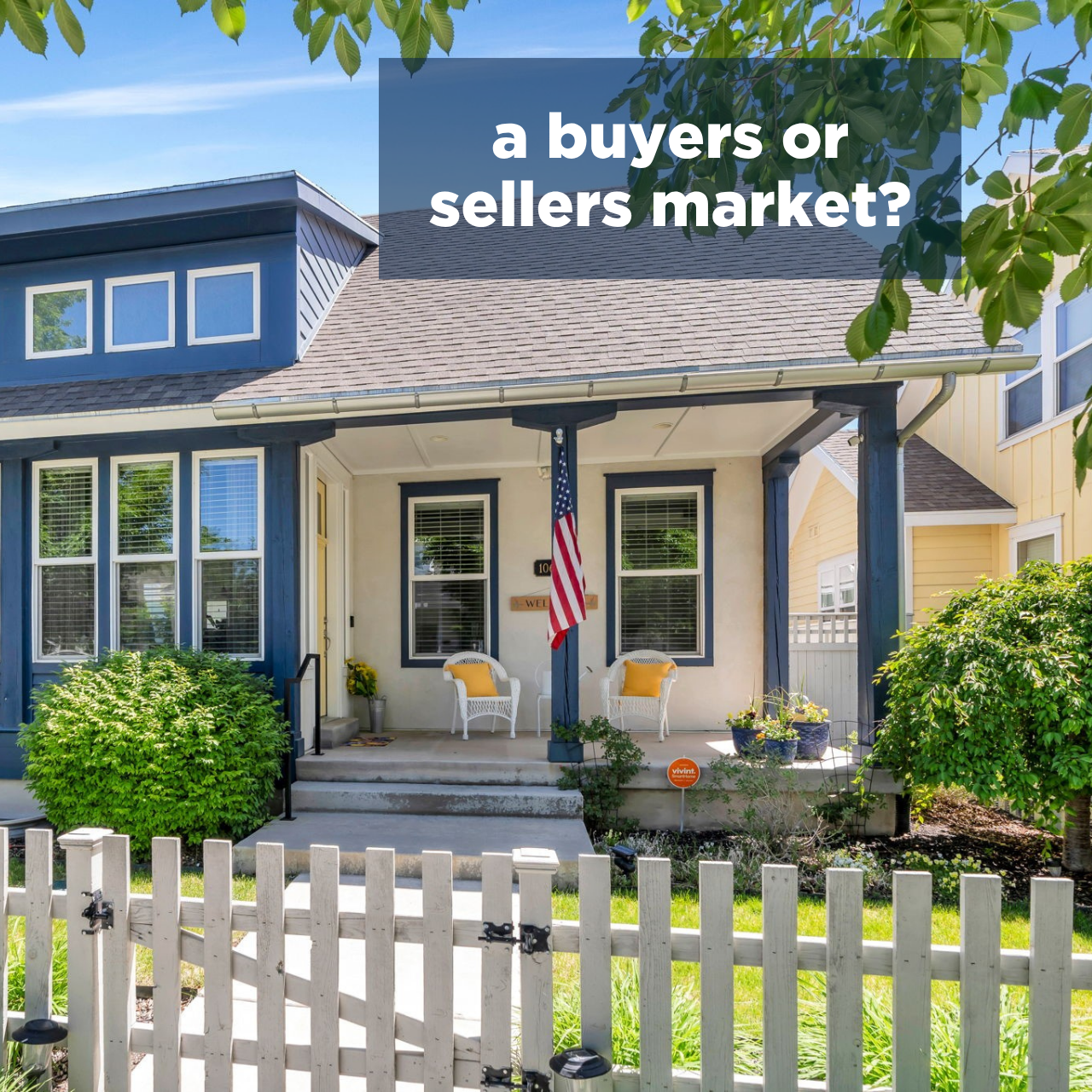
It depends on the property type. Single-family homes remain in seller's market territory, inventory is growing but still tight. Townhomes and condos have shifted toward a buyer's market, with roughly 6 to 7 months of supply statewide. The overall market is best described as balanced, with conditions varying significantly by price point and neighborhood.
Are home prices dropping in South Jordan in 2026?
Not meaningfully. South Jordan's median sold price is approximately $615,000, up about 0.9% year over year. What has changed is that overpriced homes are sitting longer and sometimes closing below ask, while accurately priced homes continue to sell near list price.
How much negotiating room do buyers have in South Jordan right now?
More than in recent years. With about 58% of Utah homes selling below their original list price, buyers are regularly getting concessions like closing cost credits, repairs, or seller-paid rate buydowns. The amount of negotiating room depends on the specific home's days on market, condition, and the seller's motivation.
What are current mortgage rates in Utah?
As of late June 2026, 30-year fixed mortgage rates are sitting around 6.47%, with some lenders quoting closer to 6.58%. The Federal Reserve has signaled a potential rate hike later this year, so the path forward on rates is uncertain in both directions. Buyers who qualify today should make decisions based on current numbers, not rate timing.
Is it a good time to buy in Daybreak in summer 2026?
Daybreak continues to hold its value better than many other submarkets, with a sale-to-list ratio of 99.1% and homes averaging around 59 days on market. New construction townhomes are also arriving in Downtown Daybreak with builder incentives. Summer is typically one of the more active buying seasons, and the Daybreak community's long-term fundamentals (TRAX access, walkable downtown, strong HOA, overall masterplanned city) continue to support demand.
Understanding where the market stands is step one. Step two is knowing what it means for your specific home, your budget, or your timeline. If you want a current read on what buyers or sellers in your neighborhood are actually experiencing, we at the Zander Team are happy to walk you through it.
Reach out at zanderteam.com or call us at 801-821-8044.