Could a data center be built in Daybreak or South Jordan?
No data center has been proposed in Daybreak or South Jordan. Salt Lake County's 180-day moratorium, passed August 18, 2026, applies only to unincorporated county land, not to incorporated cities like South Jordan.
That is the short answer, and if it is the only thing you came here for, you can stop reading. But the longer answer is the one worth your time, because the question underneath it is not really about data centers at all.
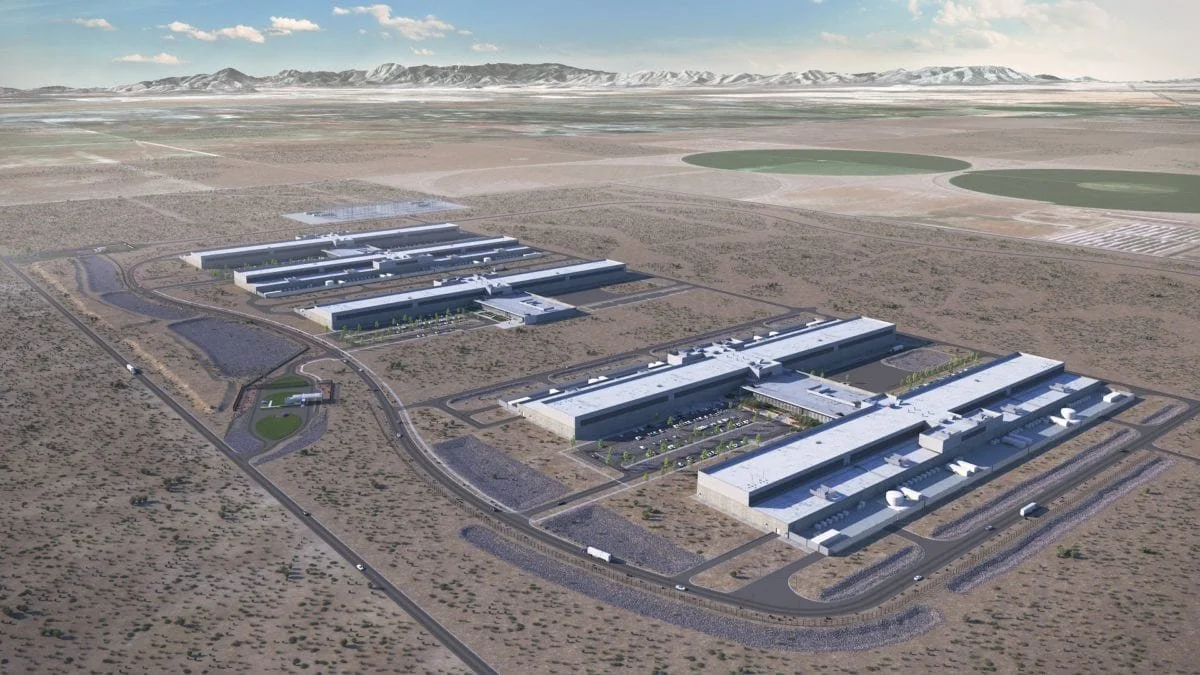
In August, residents near Mona in Juab County learned that a $10 billion data center campus, roughly three million square feet, had been approved next to them. The public hearing that cleared the way for it lasted four minutes. Neither the neighbors nor Mona's own city leaders knew the project was coming. Taylor Flake shared that, “the planning commission made an enormous decision without hearing from the people who will have to live every day with the noise, lights, traffic, water, and other changes that threaten to permanently change this rural community with a rich heritage”. Taylor and Shelly Flake formed an advocacy group, Mona Cares, within days of finding out, sharing that they were totally in the dark.
“The conditional use permit is incredibly significant, because once it’s granted, any discussion about whether the project will happen is over. All that’s left is to discuss how to mitigate the harm it will do.”
The story traveled fast across the Wasatch Front, and it left a lot of Utah homeowners asking some version of the same question: could that happen here, and how would I even know?
What Salt Lake County Actually Did
On August 18, 2026, the Salt Lake County Council voted unanimously to impose a 180-day moratorium on filing or processing any land use application, permit, or development approval tied to data centers in unincorporated Salt Lake County. The council also directed the district attorney's office and planning staff to draft real zoning rules before the pause expires. County staff, under the council's direction, will look at every legal option available.
Councilmember Pinkney framed it as a water question, citing a figure of 110 million gallons per year for a single medium-sized data center. That is the part getting the headlines.
Here is the part that matters for your house: the moratorium applies to unincorporated Salt Lake County. Daybreak is inside South Jordan. South Jordan is an incorporated city with its own planning commission, its own city council, and its own zoning code. The county's pause does not govern what happens on South Jordan land, and the county's eventual rules will not either.
This Is a Statewide Pattern Now, Not a One-Off
Salt Lake County is not acting alone, and this is the context most coverage is leaving out. Box Elder County passed a 180-day data center moratorium in June. Logan's municipal council passed one in near record time. Clearfield passed one earlier this month. Salt Lake County makes at least the fourth Utah jurisdiction to hit pause in 2026.
The pressure behind all of it is real. Utah currently has roughly 40 operating data centers and 26 more in the planning pipeline, representing tens of gigawatts of proposed capacity. That is not a rounding error on a state grid.
For a homeowner, the takeaway is not "panic." It is that Utah cities are actively rewriting the rules on what can be built where, right now, in 2026. The rules that governed your neighborhood when you bought may not be the rules a year from now. That cuts both ways, and it is worth knowing which way your city is moving.
The Real Lesson From Mona: How Little Notice You Actually Get
This is the part we think every Utah homeowner should understand.
The Mona project was not approved by county commissioners in some dramatic public vote. It moved through planning officials via a zone change and a conditional use permit. The conditional use permit document itself, three pages long, laid out no requirements for alerting neighbors. None of the adjacent property owners received prior notice.
Juab County Commissioner Marty Palmer responded to outrage expressed by residents by stating that the commission provided all public notice required by Utah State law: publishing notices on their website as well as in the newspaper (ABC4).
That is not a scandal so much as a procedural reality, and it is the reality almost everywhere. Notice requirements in Utah vary enormously depending on what kind of application is filed. A full rezone typically triggers mailed notice to nearby property owners and a publicly noticed hearing. But administrative approvals and conditional use permits can move with far lighter requirements, sometimes nothing more than a posted agenda that nobody outside the process is watching.
In other words: the system is generally not designed to come find you. It is designed to be available to you, which isn’t the same.
Where to Actually Look
If you want to know what is being proposed near your home in South Jordan, Daybreak, or anywhere in Salt Lake County, these are the four places that actually work.
1. The Utah Public Notice Website. Every public body in the state is required to post meeting notices and agendas at utah.gov/pmn. You can filter by entity. Add South Jordan City and the Salt Lake County Council, and you are watching the same feed the insiders watch.
2. Your city's planning commission agenda. This is where land use applications surface first, usually weeks before anything reaches a city council. South Jordan posts council and planning materials through the city's website. Planning commission is the meeting that matters. By the time something hits city council, the shape of it is largely set.
3. The county parcel and zoning viewer. Look up your own address, then look up the vacant land near you. Knowing the current zoning designation on the empty parcel behind your neighborhood tells you what could be built there by right, without any public hearing at all. Most homeowners have never done this. It takes about ten minutes.
4. Your HOA or community association. In a master-planned community like Daybreak, the community association often hears about adjacent development activity before individual homeowners do, and the ongoing build-out parcels have their own approval track.
Set a calendar reminder to check the first two once a month. That single habit puts you ahead of roughly everyone on your street.
Meanwhile, Here Is What Is Actually Being Built Near Daybreak
It is worth pulling back from the anxiety for a second, because the actual development story in southwest Salt Lake County right now is not industrial. It is amenity, and a lot of it just finished or is about to.
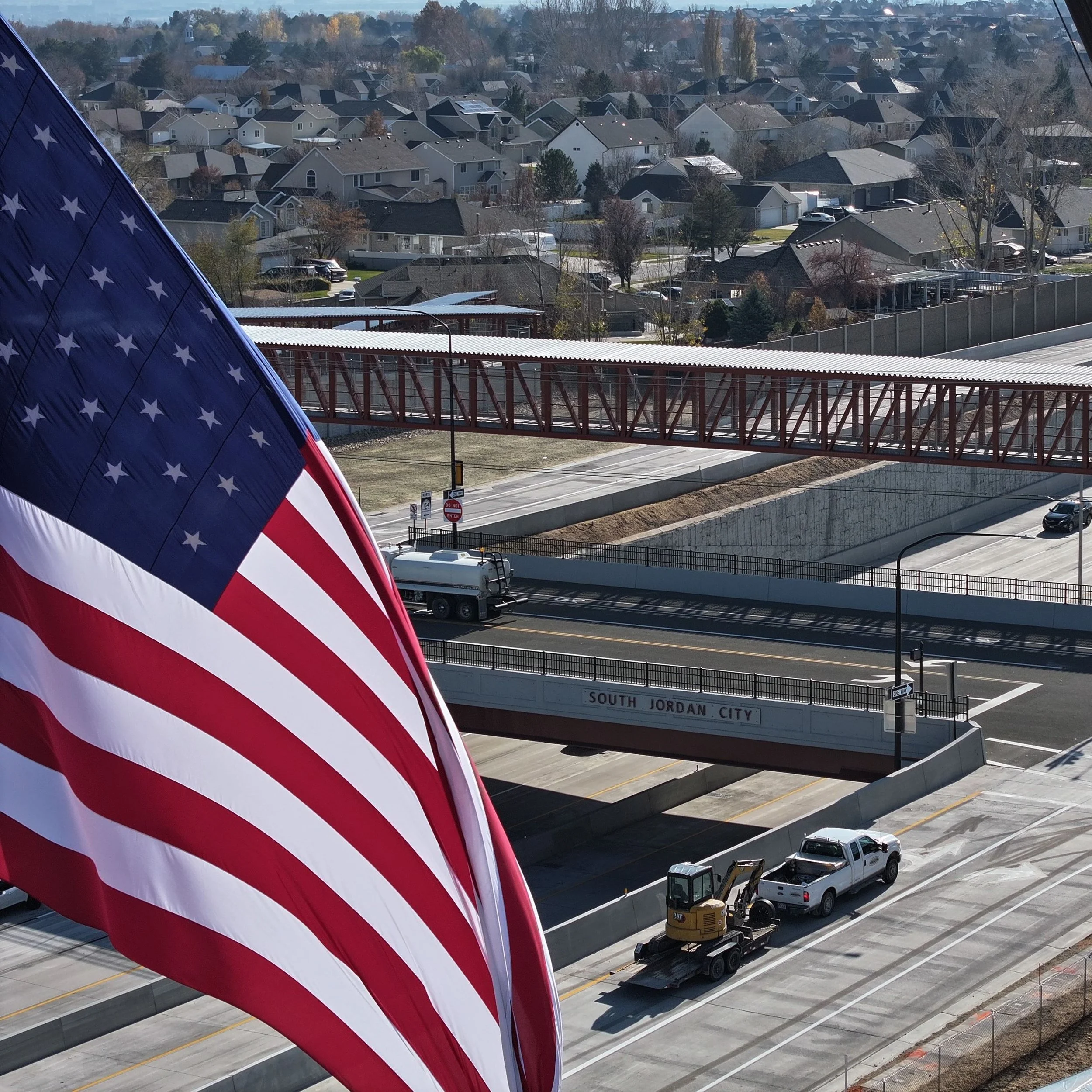
South Jordan's Bangerter Highway interchanges at 9800 South, 10400 South, and 11400 South are all complete, closing out the planned interchange construction inside city limits. If you bought here during that work, you bought during the disruption and you now own during the payoff.
In Downtown Daybreak, the Larry H. and Gail Miller Family Arts Center broke ground on March 19, 2026. The plan is roughly 89,000 square feet with an 800-seat proscenium theater, flexible performance and rehearsal space, a visual art gallery, and classrooms, made possible in part by a $25 million gift from the Larry H. and Gail Miller Family Foundation. Trader Joe's has been confirmed for Daybreak. The Salt Lake Bees have been playing at Daybreak Field since April 2025.
So Does Any of This Actually Move Your Home Value?
Here is where we are going to be straight with you instead of telling you what you want to hear.
Amenities like an arts center, a ballpark, and a grocery anchor are lagging indicators, not instant equity. They tend to show up in values slowly, through the much less exciting mechanism of more people wanting to live somewhere and fewer people wanting to leave. Anyone who tells you a Trader Joe's added a specific dollar figure to your home is guessing.
On the other side, the effect of heavy industrial development on nearby residential values is genuinely mixed in the research and depends heavily on distance, visibility, traffic, noise, and whether the project brings local employment. It is not automatically negative and it is not automatically catastrophic. What consistently does hurt is surprise: buyers discount for uncertainty, and a neighborhood in the middle of a public fight about an unresolved project tends to sit on market longer while that fight plays out.
This loops us back to the practical point. It doesn’t do much to express your outrage after the fact. It is knowing early enough to show up, comment, and make an informed decision about your own timing.
Frequently Asked Questions
Is a data center being built in Daybreak or South Jordan? No. As of publication, no data center has been proposed in Daybreak or South Jordan. Salt Lake County's moratorium covers unincorporated county land, which does not include Daybreak or anywhere else inside South Jordan city limits.
How do I find out what's being built near my house in Utah? Check the Utah Public Notice Website at utah.gov/pmn for posted agendas from your city and county, watch your city's planning commission agenda specifically rather than just city council, and look up the zoning designation on vacant parcels near you through the county parcel viewer. Planning commission is where land use applications surface first.
Does nearby development hurt my Daybreak home value? It depends entirely on what kind. Amenity development like the Miller Family Arts Center and retail anchors tends to support values gradually. Industrial development effects vary widely by distance and visibility. The most reliable negative is prolonged uncertainty, which is exactly why finding out early matters.
When will Salt Lake County's data center rules be finalized? The moratorium passed August 18, 2026 and runs 180 days, with county staff directed to draft zoning revisions during that window. The county has said it wants resident input before drafting. Expect proposed rules in the first half of 2027.
Knowing what is happening around your home is part of knowing what your home is worth. If you are wondering how Daybreak's build-out, the Bangerter completion, or anything else on the horizon affects your specific street and your specific timeline, that is a conversation we have every week.
The Zander Real Estate Team is here to support you, whether you are two months from listing or two years from thinking about it. Call us at 801-446-2662 for a home value review, and we will walk your block with you.
Sources
Salt Lake County hit pause on data centers. Here is when they may be back on the table. (Salt Lake Tribune)
A Utah county OK'd a data center campus the size of 20 Costcos. Neighbors say they were left 'in the dark.' (Salt Lake Tribune)
Mona residents question approval process for proposed $10B data center (KSL)
South Jordan Celebrates Completion of Bangerter Highway Interchanges (South Jordan City)
A New Stage for the Southwest Valley: Larry H. & Gail Miller Arts Center Breaks Ground (Utah Policy)